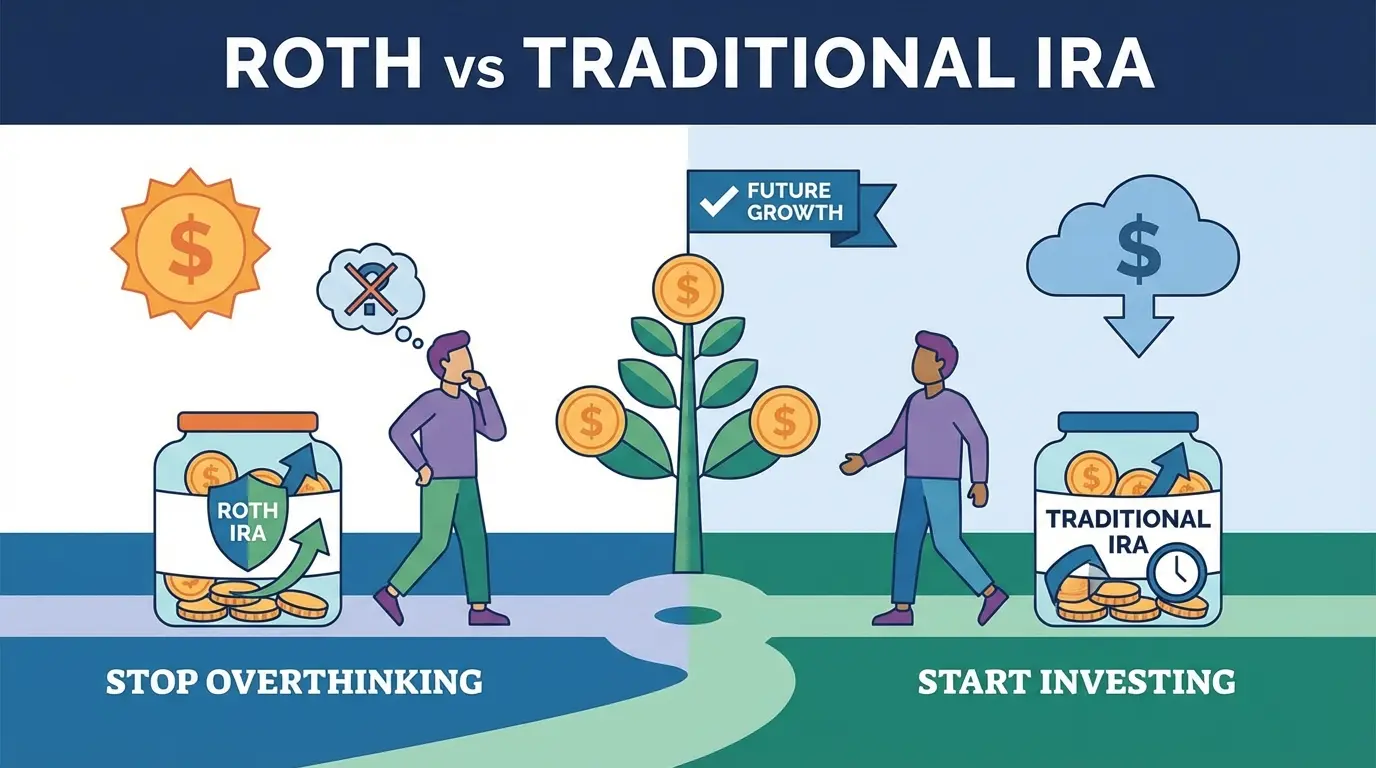
Roth IRA vs Traditional IRA: The Retirement Showdown That’s Way Less Confusing Than You Think
Alright, let’s cut through the noise. You’ve probably spent the last hour down a Reddit rabbit hole, reading conflicting advice about whether a Roth IRA or Traditional IRA will save you from eating cat food in your golden years. Meanwhile, your money’s doing absolutely nothing in some checking account earning 0.01% interest.
I’ve been there. Paralyzed by tax brackets and contribution limits while compound interest ticks away without me. Here’s the thing nobody wants to admit: picking between these two retirement accounts isn’t rocket science. It’s basically a bet on whether you think the government will tax you harder now or later.
The Core Difference (In Plain English)
Traditional IRA: You get a tax break NOW. Money goes in pre-tax, grows tax-free, and you pay taxes when you withdraw in retirement. It’s like telling the IRS “I’ll catch you later.”
Roth IRA: You pay taxes NOW. Money goes in after-tax, grows tax-free, and you withdraw completely tax-free in retirement. You’re basically prepaying your tax bill and telling Uncle Sam to buzz off forever.
That’s it. That’s the whole debate.
When a Traditional IRA Makes Sense
Here’s where I’ll actually give you a straight answer. A Traditional IRA probably works better if:
- You’re in a high tax bracket right now (32% or higher)
- You expect to earn less in retirement than you do today
- You need that upfront tax deduction to survive April 15th
- Your employer doesn’t offer a 401k match you should be grabbing first
The tax saving hits immediately. Contribute $7,000 this year while earning good money? That could mean $2,000+ back from the IRS. Real money, right now.
When a Roth IRA Is the Move
The Roth IRA crowd tends to be younger folks who aren’t earning peak income yet. Makes sense. Pay taxes while you’re in the 22% bracket, then withdraw tax-free when you’d otherwise be in a higher one.
A Roth is probably your play if:
- You’re early in your career with room to grow
- You think tax rates will climb over the next few decades (spoiler: they probably will)
- You want flexibility since you can withdraw contributions anytime without penalties
- You’re already maxing out your 401k and need another investing vehicle
I lean toward Roth accounts for most people under 40. Tax-free growth for 25+ years is genuinely powerful stuff.
The Question Nobody Asks
Here’s what kept me up at night: what if I’m wrong about my future tax bracket? What if I pick the Roth, then some medical issue forces early retirement and I would’ve been better off with the Traditional deduction?
Plot twist: you can have both. Nothing stops you from splitting contributions between accounts. Some years, lean Roth. Other years, grab that Traditional deduction. Tax diversification is a real strategy, not a cop-out.
The Math That Actually Matters
If you’re in the same tax bracket at contribution and withdrawal, both accounts end up mathematically identical. Seriously. Same money at the end.
The difference only kicks in when brackets shift. Lower bracket now than later? Roth wins. Higher bracket now than later? Traditional wins.
Since most of us have no clue what Congress will do to tax rates over 30 years, I usually tell people to just pick one and start investing. The account type matters way less than actually getting your money into the market. If you’re still agonizing over broad market ETFs like VOO vs VTI, the same principle applies: perfect is the enemy of good.
One More Thing About Withdrawals
Traditional IRAs force you to take Required Minimum Distributions at 73. The government wants their cut eventually. Roth IRAs? No RMDs during your lifetime. Your money can compound until you actually need it, and you can pass it to heirs with cleaner tax treatment.
That flexibility alone makes the Roth attractive if you’ve got other retirement income covered.
Just Pick One Already
Look, I spent way too long overthinking this exact decision while my money sat earning nothing. The real answer is that both accounts are fantastic compared to a taxable brokerage account. Both beat stuffing cash under your mattress.
If you’re young and not earning big money yet: Roth IRA. If you’re in peak earning years and need tax relief now: Traditional IRA. If you’re genuinely unsure: do both and stop losing sleep over it.
The best retirement account is the one you actually fund consistently. Now stop reading and go open one.