Dividend Investing vs Growth Stocks: The Portfolio Battle That’s Keeping You Up at Night
Let me guess. You’ve got a brokerage account, some cash to deploy, and you’re stuck in an infinite loop watching YouTube videos where one guy screams “PASSIVE INCOME IS KING” and the next calls dividend stocks “a boomer trap.” Meanwhile, your money sits in a savings account earning roughly nothing.
I’ve been there. Paralyzed by conflicting advice while the stock market does its thing without me.
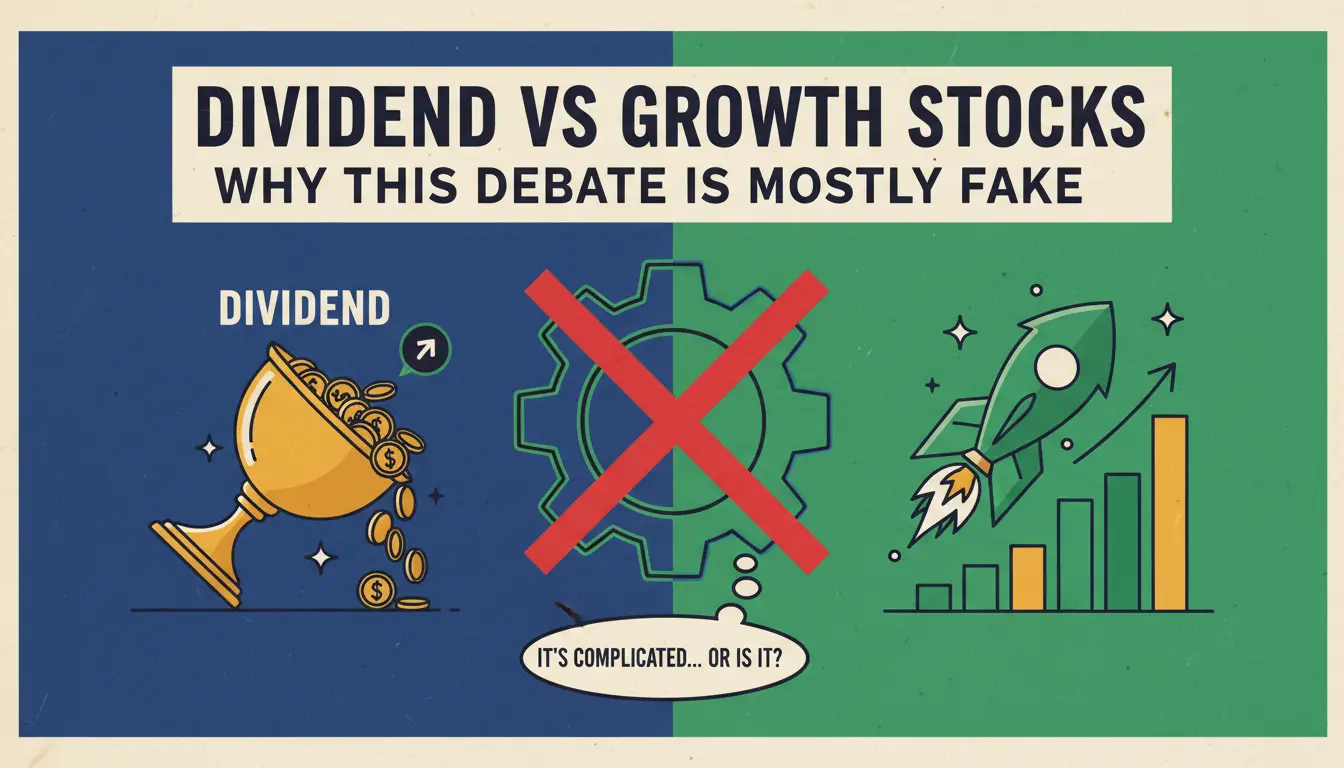
Here’s what nobody tells you: the dividend investing versus growth stocks debate is mostly fake. It’s not a war. It’s a spectrum. And your portfolio strategy should probably include both, just in different proportions depending on where you are in life.
What Dividend Investing Actually Means (And Doesn’t)
Dividend investing sounds sexy. Money shows up in your account every quarter just for owning stocks. Passive income while you sleep. Financial freedom. Early retirement on a beach somewhere.
The reality? Most dividend yields hover between 2-4%. So your $10,000 investment generates maybe $300 a year. That’s not “quit your job” money. That’s “nice dinner once a month” money.
But here’s where it gets interesting. Dividend stocks tend to be mature, profitable companies. They’ve already had their explosive growth phase. Now they’re returning cash to shareholders because they don’t need it for expansion. Think Coca-Cola, Johnson & Johnson, Procter & Gamble. Boring companies that sell boring stuff people actually need.
The appeal isn’t just the yield. It’s the stability. When the stock market throws a tantrum (and it will), dividend payers often fall less dramatically. Plus, those quarterly payments feel like a pat on the back. Psychological reassurance that yes, this investing thing is working.
The Dividend Trap Nobody Warns You About
High yields aren’t always good news. Sometimes a stock yields 8% because its price cratered and nobody updated the dividend yet. That’s not opportunity knocking. That’s a warning siren.
I learned this the hard way with a telecom stock I won’t name. Juicy 7% yield. Felt like I’d hacked the system. Then they cut the dividend by 50%, the stock tanked another 30%, and I learned an expensive lesson about chasing yield.
If you’re looking for more reliable ways to generate monthly income from your portfolio, selling covered calls can actually supplement dividend income pretty effectively.
Growth Stocks: Where Dreams and Nightmares Collide
Growth stocks don’t pay dividends. They plow every dollar back into the business. The promise? Your shares will be worth way more in ten years than they are today.
Amazon didn’t pay dividends while it ate retail. Tesla didn’t share profits while building Gigafactories. Netflix reinvested everything into content while destroying Blockbuster.
The upside is obvious. A $10,000 investment in Amazon in 2010 would be worth over $200,000 today. No dividend portfolio is touching those returns.
But growth stocks are emotional rollercoasters. They can drop 40% because one earnings report disappointed Wall Street analysts. They trade on stories and potential, not current profits. When market sentiment shifts, they get crushed first and hardest.
The Growth Stock Reality Check
For every Amazon, there are hundreds of “next big thing” companies that went nowhere. Or worse, went bankrupt. Picking individual growth winners is brutally hard. Most professionals can’t do it consistently.
This is why broad index funds exist. If you’re torn between individual stock picking and just riding market returns, the VOO vs VTI debate is worth settling. Both give you diversified exposure without the stock-picking headaches.
So Which One Wins?
Neither. Both. It depends.
I know that’s frustrating. But portfolio strategy isn’t one-size-fits-all. It’s personal finance, emphasis on personal.
Here’s my framework:
Young and Decades from Retirement?
Lean heavily toward growth. You have time to recover from crashes. Compound growth is your best friend. Dividends at this stage are nice but unnecessary. You probably don’t need the income, and reinvesting dividends creates tax headaches in taxable accounts.
Mid-Career with Some Gray Hairs?
Start blending. Maybe 60% growth, 40% dividend payers. You want continued appreciation but also some stability. Those dividend payments become your portfolio’s shock absorbers.
Approaching Retirement or Already There?
Flip the ratio. Dividend income means selling fewer shares during downturns. Stability matters more than maximum growth. Your portfolio becomes an income machine rather than an accumulation vehicle.
The Portfolio Strategy That Actually Works
Here’s what I do, and I’m not claiming this is optimal for everyone:
- Core position in broad market ETFs (growth exposure without single-stock risk)
- Dividend aristocrats for stability (companies that have increased dividends for 25+ consecutive years)
- A small allocation to speculative growth plays (money I can afford to lose)
- Rebalance once a year, not every time I read scary headlines
The key is not obsessing over which approach is “better.” The key is having an approach at all. Most people who fail at investing do so because they panic-sell during downturns or chase whatever performed best last year.
Final Thoughts (Without Saying “In Conclusion”)
The dividend investing versus growth stocks debate generates endless content because there’s no definitive answer. Both work. Both have tradeoffs. Your optimal mix depends on your age, risk tolerance, income needs, and psychological makeup.
What matters more than the perfect allocation is actually starting. The stock market rewards patience and consistency, not perfection. Pick a reasonable strategy, automate your contributions, and stop checking your account daily.
Your future self will thank you. Probably while sipping something expensive on that beach.