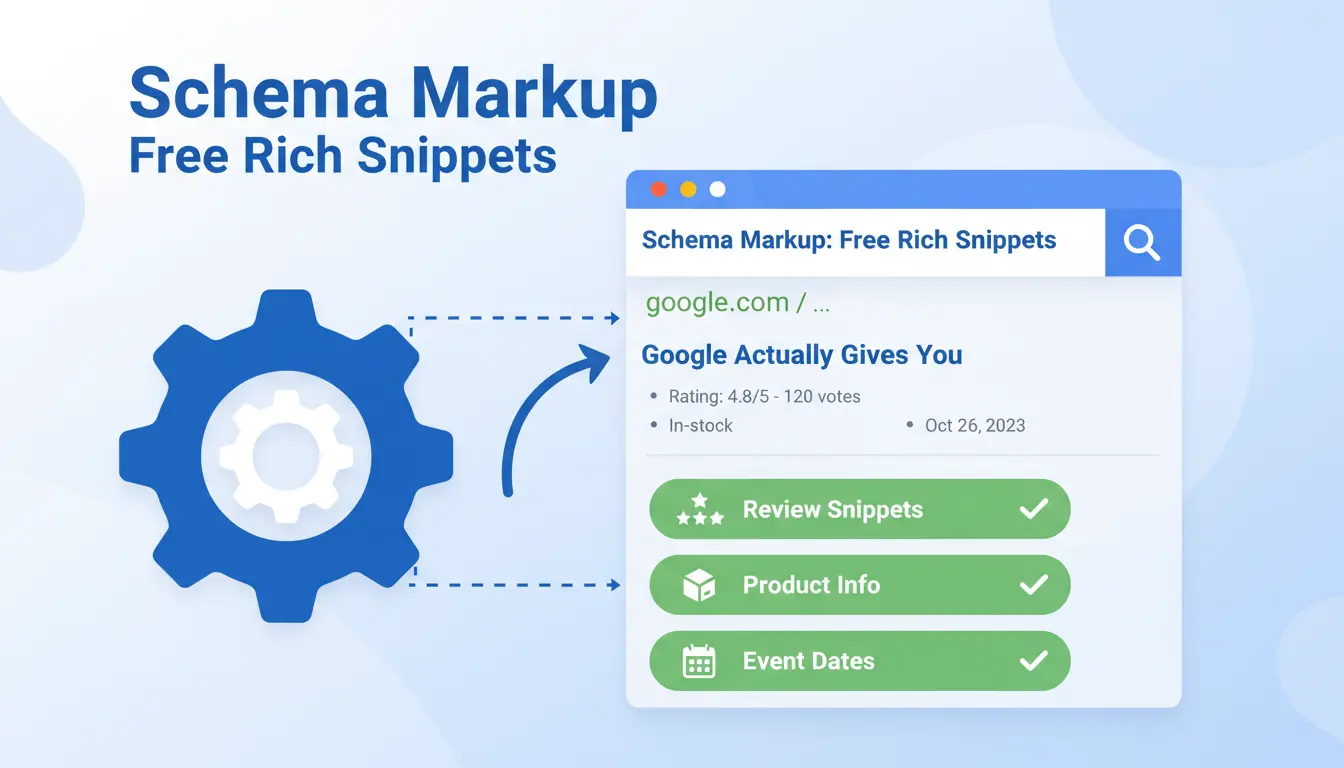
Schema Markup: The Nerdy Superpower Google Actually Rewards
Let me tell you about the time I added 40 lines of code to a client’s website and their click through rate jumped 35% in three weeks. No content changes. No link building. No sacrificing goats to the algorithm gods. Just structured data doing its thing.
Schema markup is the SEO equivalent of showing up to a job interview in a tailored suit while everyone else is wearing wrinkled khakis. You’re giving Google exactly what it wants: context. And Google rewards clarity with those fancy rich snippets that make your search results look like they actually deserve to be clicked.
What Schema Markup Actually Is (Without the Buzzword Salad)
Here’s the deal. Search engines are smart, but they’re not that smart. They can read your content, sure. But can they understand that your page is about a recipe that takes 30 minutes, costs $15 in ingredients, and has 847 five-star reviews? Not unless you tell them explicitly.
That’s what structured data does. It’s a standardized vocabulary that translates your content into something machines can parse without guessing. Think of it as leaving very detailed sticky notes for Google’s crawlers.
The format most commonly used is JSON-LD, which sounds intimidating but really isn’t. It sits in your page’s head section, invisible to users but screaming information at search engines.
The Types That Actually Move the Needle
Not all schema types are created equal. Some will transform your search appearance. Others are about as useful as a screen door on a submarine.
- FAQ Schema: Instant real estate expansion in search results. Your listing suddenly takes up three times the space.
- Review/Rating Schema: Those golden stars? Click magnets. Pure psychological catnip.
- How-To Schema: Step-by-step previews that make your content look authoritative before anyone clicks.
- Article Schema: Headlines, publish dates, author info. Basic but foundational.
- Product Schema: Price, availability, reviews. Essential for e-commerce.
Why Your Click Through Rate Is Suffering
You’re ranking on page one. Congratulations. But you’re getting outclicked by the result below you. Why? Because their listing has stars, images, price ranges, and FAQ dropdowns. Yours has… a title and a meta description. Sad.
Rich snippets created by proper schema markup can boost click through rate by 30% or more. I’ve seen higher. When your competitor’s result looks like a plain text email and yours looks like a well-designed card with review stars, who do you think gets the click?
This is technical SEO that directly impacts revenue. It’s not some abstract “site health” metric. It’s real clicks from real humans who chose your result because it looked more trustworthy.
The Implementation Reality Check
Here’s where most guides lose people. They show you perfect JSON-LD examples and assume you’ll figure out the rest. Let me be more helpful than that.
If you’re running WordPress (and statistically, you probably are), plugins like Yoast or Rank Math handle basic article and breadcrumb schema automatically. But for the good stuff—FAQ, How-To, custom product markup—you’ll need to get your hands dirty or use something more specialized.
For those already optimizing their WordPress setup with things like proper caching configurations, adding schema markup is the logical next step. You’ve made the site fast. Now make it visible.
Testing: Because Google Won’t Tell You When You Screw Up
Here’s a fun fact that’ll save you months of wondering why your rich snippets aren’t showing up: Google’s Rich Results Test tool is your new best friend. Paste your URL, see exactly what Google sees, and fix the errors it flags.
Common mistakes I see constantly:
- Missing required properties (every schema type has them, look them up)
- Mismatched types (claiming something is a Recipe when it’s actually an Article)
- Invalid JSON syntax (a single missing comma will break everything)
- Schema that doesn’t match visible content (Google hates this, considers it spammy)
The “Don’t Be That Person” Warning
I need to mention this because someone will inevitably try it: don’t add fake reviews or misleading schema data. Google has gotten very good at detecting this garbage, and the penalty isn’t worth the short-term gains.
Your review schema should match actual reviews on your page. Your FAQ schema should reflect FAQs users can actually read. This isn’t a loophole—it’s a presentation layer for existing content.
Scaling This Without Losing Your Mind
If you’re managing hundreds or thousands of pages, manually adding schema to each one sounds like a nightmare. It is. This is where programmatic approaches to SEO become essential. Template-based schema generation, pulling structured data from your database, and automating the whole process.
The sites winning at schema markup aren’t hand-coding JSON-LD for every product page. They’ve built systems that generate it dynamically based on page content and type.
What Actually Happens After Implementation
Don’t expect overnight miracles. Google needs to recrawl your pages, process the new structured data, and decide whether to display rich results. This takes days to weeks, sometimes longer for sites Google doesn’t crawl frequently.
Monitor Search Console’s “Enhancements” section. It’ll show you which schema types Google has detected and any errors preventing rich results from appearing. This is your debugging dashboard.
And here’s something nobody tells you: Google doesn’t guarantee rich snippets even with perfect schema markup. They display them when they feel it improves the search experience. But having proper structured data is the entry ticket to that lottery.
The Bottom Line
Schema markup is one of those rare technical SEO wins that’s actually straightforward once you understand it. No mysterious algorithm changes. No hoping Google notices your content. Just clean, structured data that tells search engines exactly what your pages contain.
Start with FAQ schema on your top-performing posts. Add review schema if you have legitimate reviews. Watch your click through rate climb while competitors wonder what changed.
It’s not magic. It’s just showing up prepared while everyone else wings it.