
What Display Ads Actually Pay Small Sites in 2026
Part of Making Money From a Small Site and Small Business Websites
By Paul Peery · July 16, 2026 · 4 min readUpdated August 12, 2026
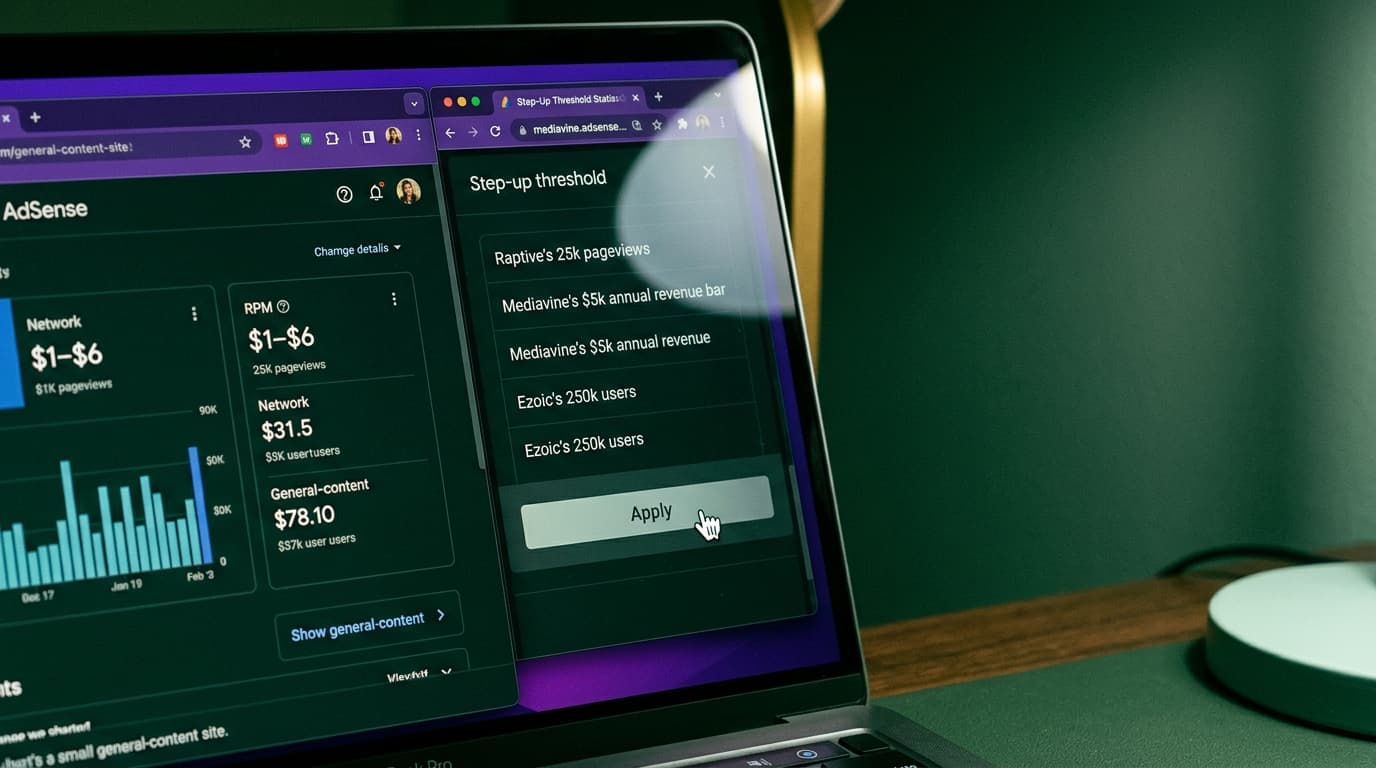
What AdSense actually pays right now
If you run a small general-content site, AdSense is often the starting point. Reported RPMs (revenue per 1,000 pageviews) for everyday topics like news, lifestyle, or broad how-tos commonly sit in a low range. Multiple 2025–2026 publisher roundups put generic or low-value inventory around $0.50–$3, with many average sites landing between roughly $1–$6 or so depending on traffic quality and geo.[1]
Higher-paying niches change the math a lot. Finance, insurance, legal, health, and some tech topics attract bigger advertiser budgets. Reports show these can reach $5–$15+ and, for strong US-heavy traffic in the best categories, $15–$50 or higher on good days or established sites. One 2026 niche breakdown listed finance-style ranges often in the $30–$60 area for quality Tier-1 traffic. Geography matters too—US, UK, Canada, and Australia traffic pays more than most other places.[2]
These are ranges from public reports and publisher shares, not guarantees. Your exact RPM depends on ad placements, page speed, fill rate, seasonality (Q4 is usually strongest), and how much of your traffic is high-intent. Track your own Page RPM in AdSense rather than chasing averages.
AI Overviews and the click drop
Google’s AI Overviews have expanded. By 2026 reports put them on a large share of searches—around half in some datasets. When an Overview appears, fewer people click traditional results.
Studies show clear organic CTR drops. Ahrefs found roughly a 58% lower average click-through rate for the top-ranking page when an AI Overview is present (December 2025 data). Seer Interactive tracked organic CTR falling sharply on Overview queries (examples include drops from around 1.76% toward 0.61% in earlier windows, with some later rebound). Paid ads also saw big CTR declines on those queries. Zero-click searches have risen.[3]
For display ads this hits you through lower traffic volume, not directly lower on-site RPMs. Fewer visits mean fewer impressions. Informational content feels it most. Transactional or high-intent pages often hold up better. Some publishers also report AdSense softness tied to market shifts and extra inventory, with RPM drops of 20–50% noted in places since early 2025. Content quality and niche still matter more than ever.[4]
The practical takeaway: diversify traffic sources where you can, focus on content that still earns clicks (unique data, tools, strong opinions, commercial intent), and keep an eye on how much of your traffic still comes from Google organic.
The step-up path: Ezoic, Mediavine, Raptive
Once you outgrow pure AdSense, managed premium networks usually deliver higher RPMs through better demand, header bidding, and optimization. Publisher comparisons commonly put AdSense ceilings around $3–$10 for many sites, with Ezoic often better than AdSense (mid-teens possible), and Mediavine/Raptive frequently in the $15–$40+ range (sometimes higher in Q4 or strong niches). Lifts of 2–5x over AdSense are regularly reported when traffic qualifies, though results vary by site.[5]
Always check the official pages yourself—requirements change. Here’s the rough picture as of mid-2026 reports:
-
Ezoic: Full platform generally wants 250,000+ monthly active users (raised February 2026). Earlier smaller sites were grandfathered if they stayed continuously active. There is a selective Incubator program for growing sites that don’t yet hit the bar. Ezoic uses AI optimization and can work as a step between AdSense and the top-tier managed networks.[6]
-
Raptive (formerly AdThrive): Minimum 25,000 monthly pageviews (lowered from 100k in October 2025). For sites in the 25k–99k range, they typically want a solid share of traffic from US/UK/Canada/Australia/New Zealand (around 50%); it eases a bit above 100k. Strong focus on quality content and often lifestyle/food/home-leaning demand, though not exclusive.[7]
-
Mediavine: Main network now looks at roughly $5,000+ in annual ad revenue rather than a fixed session number. Their Journey on-ramp starts much lower—around 1,000 monthly sessions—for growing sites, with an upgrade path once revenue hits the main threshold. They emphasize original content, clean traffic, and brand-safe experience.[8]
Other mid-tier options exist (some accept lower traffic), but these three are the most discussed step-ups. Application approval is not automatic even if you hit the numbers—they review content quality, traffic sources, and policy compliance.
When leaving AdSense is worth it
Stay on AdSense while your traffic is low or unstable. It has no traffic minimum, is simple, and pays reliably (Net-21-ish). Once you consistently clear a premium threshold and your niche/geo looks solid, test or apply. Many people see a clear RPM jump after moving to a managed network because of better demand competition and hands-on optimization.
Do the math for your site: estimate current monthly pageviews × current RPM vs. a realistic premium RPM. Factor in payout timing (some networks are Net-45 or Net-65, which affects cash flow) and any temporary dip while the new network ramps. If your content is thin, AI-heavy, or low-quality, you may get rejected or see weak results—fix the foundation first.
Also watch site speed and Core Web Vitals. Heavy ad setups can hurt rankings and thus traffic. Premium networks usually try to balance this, but it’s still your site.
Practical next steps
- Know your real numbers: pageviews, sessions, users, RPM, and top countries from Analytics + AdSense.
- Improve what you control—better placements, faster pages, stronger content in higher-CPC topics if it fits your site.
- Apply only when you clearly meet (or exceed) the published bars, and have clean traffic history.
- Compare a couple of options if you qualify for more than one. Some people A/B or move after a trial period.
- Keep verifying thresholds and terms on the official Mediavine, Raptive, and Ezoic sites—they update them.
Display ads remain a real income stream for small sites, but 2026 rewards quality traffic and the right network for your size more than raw volume alone. Start simple, measure honestly, and step up when the numbers make sense.
Keep reading
All posts
Display Ads on Small Sites: Real Thresholds and Hidden Costs
Slapping display ads on a small site often yields pocket change while wrecking page speed and reader trust. Here is how network tiers, performance taxes, and direct deals actually compare.
August 18, 2026 · 4 min read