
Event Contracts 2026: Probability Priced Like Odds or Fancy Sports Betting?
Part of Options Trading, From the Beginning
By Paul Peery · July 14, 2026 · 5 min readUpdated August 12, 2026
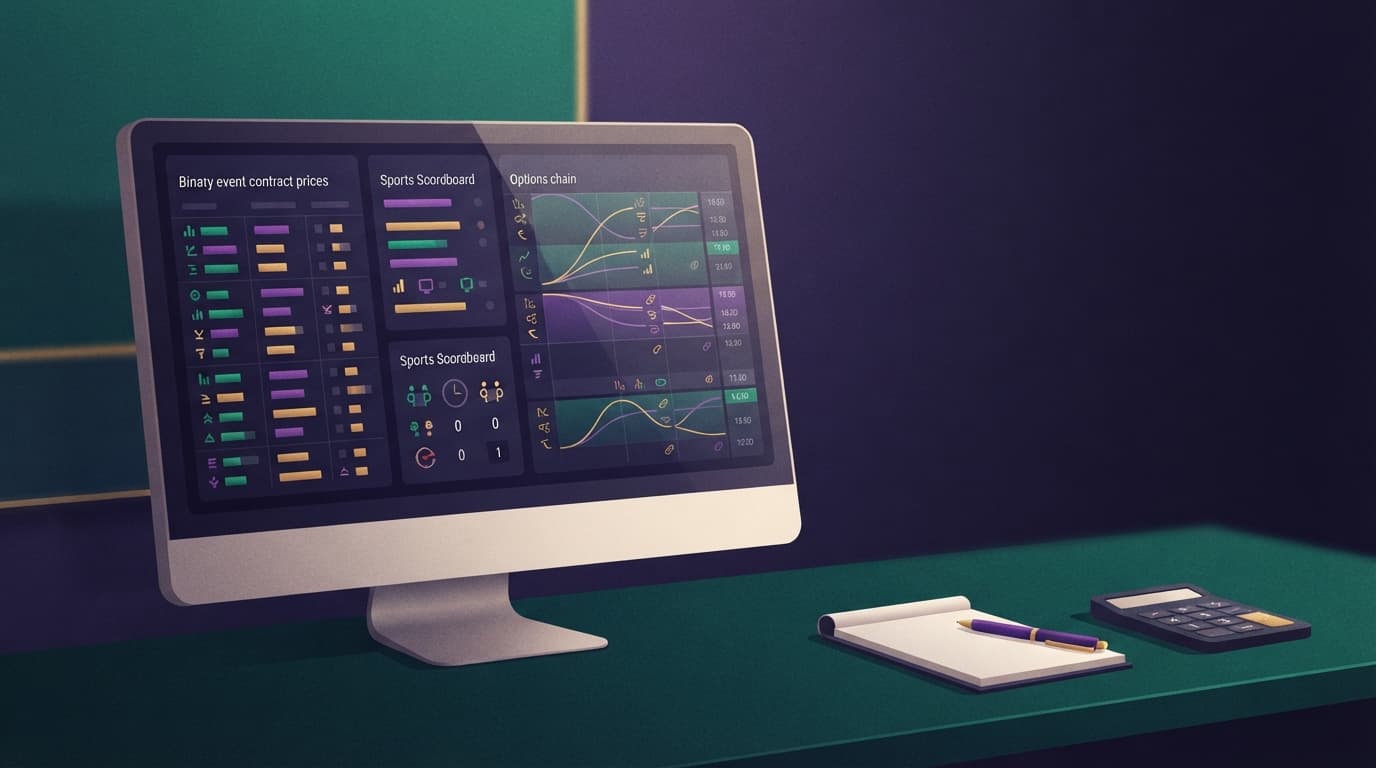
I've watched prediction markets and event contracts explode over the last couple years. Platforms like Kalshi and Polymarket (with its U.S. regulated path) turned real-world yes/no questions into tradable contracts. Sports take most of the volume, politics and econ events fill the rest. Here's a plain-language breakdown of what these binary contracts actually are, how they differ from options, and my take on where they sit.
What a binary yes/no event contract is
An event contract is usually a simple yes/no bet on a specific outcome. Will it rain in New York tomorrow? Will Team A win the game? Will a certain bill pass? If the answer is yes (and you hold the "yes" side), the contract pays $1. If no, it pays $0. That's the whole payoff. No partials in the basic version.
You buy or sell these contracts for a price between roughly $0.01 and $0.99. That price is the market's current implied probability. A "yes" contract trading at $0.65 means the crowd is pricing about a 65% chance the event happens (before fees). Buy it at $0.65 and if yes hits you get $1—profit of about $0.35 per contract. If no, you lose the $0.65. You can usually sell or buy out of the position before settlement if the price moves or you change your mind.[1]
The exchange matches buyers and sellers. It does not take the other side like a sportsbook house. Fees come out of the trades instead. Prices update live based on order flow, so the number on the screen is just the latest market consensus, not a bookie's line.
How this differs from a regular option
People sometimes call event contracts "binary options," and that is close. But they are not the same as the equity or futures options most of us trade.
A standard call or put option gives you the right (not the obligation) to buy or sell an underlying asset at a strike price by or on a certain date. Its value moves with the asset price, time left (theta decay), volatility, and distance to the strike. The final payoff can be anywhere from zero to a large number depending on how far the underlying moves. You have Greeks, delta hedging, and continuous price risk. You can often exercise early on American-style options.
Event contracts skip all that. There is no continuous underlying price path to track. No strike to manage. No time value in the options-Greeks sense. Just a fixed binary settlement: $1 or $0 based on whether the defined event happens by the deadline. The price sits between 0 and 1 and acts like a probability because of that fixed payout. Risk is capped at what you paid (plus fees). No margin calls for the full notional in the basic prepaid structure many platforms use.[2]
In short: options let you express views on direction, magnitude, and volatility of prices. Event contracts let you express a view on whether one discrete thing happens. Useful for different jobs. One is not better; they are different tools.
The boom and the regulation picture
These products have been around for years under CFTC oversight as a type of swap or event-based derivative. The recent surge came after court wins and a more open CFTC posture that opened the door wider to politics and especially sports. By early 2026, sports made up the bulk of volume on the big platforms—around 87% of one major exchange's roughly $40 billion in trailing twelve-month activity in one snapshot. Politics, crypto, culture, weather, and economic indicators fill out the rest.[3]
Kalshi runs as a CFTC-designated contract market. Polymarket has a regulated U.S. channel now alongside its broader offering. Other brokers and even some sportsbooks have added event contracts. The federal derivatives label means preemption fights with state gambling regulators keep popping up in court. Some states treat sports-linked contracts as unlicensed gaming. The platforms and CFTC say they are swaps under the Commodity Exchange Act. That legal back-and-forth is still live. Insider trading rules and integrity monitoring have tightened on the platforms too.
Does this belong in a trading approach—or is it sports betting with a brokerage skin?
Honest answer: it depends on the contract and how you use it.
On the trading side: you get transparent order books, the ability to exit early, and prices that can aggregate information better than polls in some cases. Weather or economic contracts can serve real hedging for people with genuine exposure (a farmer, a business with rate risk). The no-house structure and CFTC rules give it a derivatives wrapper. You can size positions carefully, treat the implied probability as a data point, and manage risk the way you would any speculative trade.
On the betting side: sports dominate volume. Many contracts look and feel exactly like moneyline or prop bets—same outcomes, same excitement, same potential for tilt. There is no traditional vig, but fees still exist and liquidity can be thin away from the popular markets. The interface and marketing often sit next to brokerage tools, which can make it feel more "investing" than it is. Addiction risk is real; experts have flagged that the continuous trading and probability framing do not magically remove the behavioral hooks of gambling.[4]
I treat most pure sports or celebrity contracts the way I treat a sportsbook: entertainment risk capital only, sized small, and never as part of a long-term portfolio. For contracts tied to events that actually affect my finances or that I have edge information on (rare), I look at them more like any other binary speculative tool. The key is honesty about edge, fees, liquidity, resolution rules, and personal risk tolerance.
Practical notes if you look at them
Read the exact contract terms. How is "yes" defined? Who decides resolution and on what data? What are the fees? Can you trade out easily? Stick to regulated platforms if you are in the U.S. Use only money you can afford to lose completely. Watch for thin books—big spreads can eat you. And remember taxes apply; keep records.
This is educational only, not financial advice. Markets change, regulations shift, and past information aggregation does not guarantee future results. Do your own research and decide what fits your approach.
The boom is real. The products are simple on the surface and easy to misuse. Price them as probabilities, size them like any speculative position, and stay clear-eyed about whether you are trading an edge or just placing a bet.
Keep reading
All posts
Prediction Markets Explained: How Event Contracts Work
A plain-language primer on binary event contracts: how prices reflect crowd probabilities, how they differ from options and sportsbooks, and where the risks sit.
August 26, 2026 · 5 min read