
Good Espresso at Home Doesn't Require a Four-Figure Machine
By Paul Peery · August 8, 2026 · 4 min readUpdated August 13, 2026
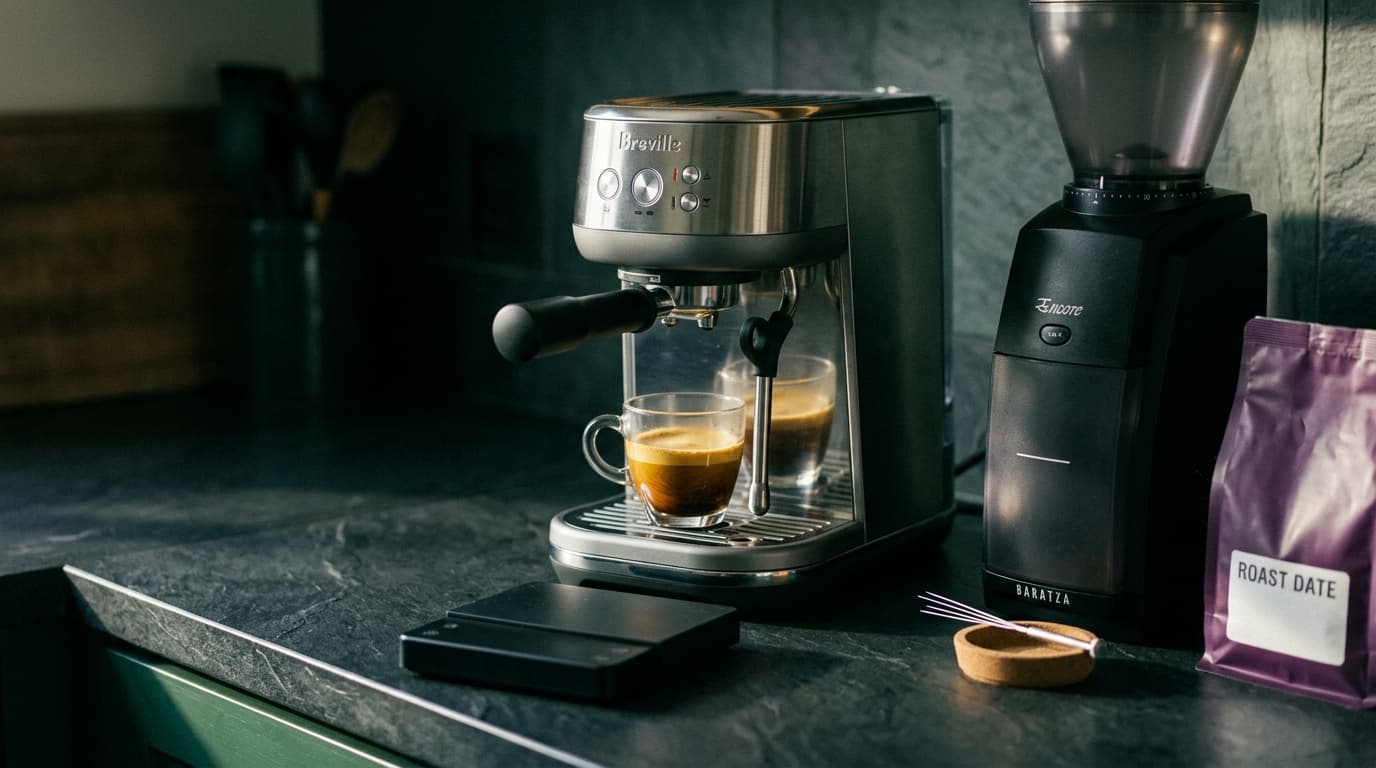
The biggest mistake people make getting into home espresso is spending $800 on a shiny machine and pairing it with pre-ground coffee or a $30 blade grinder. That combination leaves you with sour, thin water that tastes worse than a gas station drip.
If you want cafe-quality shots at home, you have to flip the budget upside down. The grinder does 80% of the heavy lifting in espresso extraction.
Your Grinder Dictates Shot Quality, Not the Machine
Espresso relies on forcing hot water through a tightly packed puck of finely ground coffee under high pressure. If your coffee particles are uneven—some tiny dust and some big chunks—the water rushes through the big gaps and avoids the dense spots. You end up with a shot that is both bitter and sour at the same time.
A dedicated espresso grinder lets you make tiny micro-adjustments to particle size so water flows evenly over 25 to 30 seconds. That fine control is why I prioritize the grinder above everything else, a topic I covered in my breakdown of my practical home coffee setup.
For electric options, the Baratza Encore ESP sits around $150 to $200 and gives you the micro-steps you need for proper espresso without clogging. If you don't mind a minute of arm workout in the morning, hand grinders like the Kingrinder K6 run around $90 to $100 and deliver burr quality that rivals $300 electric units.
The trade-off with hand grinding is real: grinding 18 grams of dense, light-roast beans at 6:00 AM gets old quickly if you need to make three lattes back-to-back.
Entry-Level Pump Machines That Squeeze Out Great Crema
Once you have a grinder that can handle espresso fineness, you do not need an Italian chrome monster with a dual boiler. You just need a machine that produces stable heat and consistent pump pressure.
The Breville Bambino usually sells between $300 and $350, and it is the entry-level benchmark for a reason. It heats up in three seconds, holds temperature surprisingly well during extraction, and includes a steam wand capable of real microfoam for milk drinks.
If your budget is tighter, simple pump machines like the De'Longhi ECP line run between $100 and $150. Paired with a decent grinder and a non-pressurized basket upgrade, these budget units can pull surprisingly good shots.
The downside to budget machines is capacity and thermal wait times. They use small heating units, so steaming milk right after pulling a shot requires a short pause, and pulling shots for a crowd will slow you down.
Manual Levers Offer Pure Espresso for Under $100
If you only drink straight espresso or Americanos and do not care about steaming milk, manual lever presses eliminate electronics entirely.
The Flair Neo Flex usually sells right around $99 to $110. It uses a manual lever arm where your own body weight generates the 9 bars of pressure needed to pull a shot. Because there are no heating elements or pumps to break, almost every dollar you pay goes toward the mechanical frame and brew chamber.
The honesty beat here is workflow friction. You have to boil water in a kettle separately, preheat the brew cylinder so it doesn't sap temperature from your water, and clean the chamber by hand after every single shot.
If that routine sounds tedious before your morning caffeine, you are far better off with a simple pump machine or sticking to a low-effort brew method like my cheap no-fuss cold brew method.
Shiny Accessories That Wasted My Money
When you get into espresso, algorithms immediately flood your feed with high-end accessories. Most of them do not change what ends up in your cup.
Heavy palm-style rotary distributors look sleek, but real-world testing shows they just compress the top layer of coffee unevenly while leaving the bottom loose. A simple wire WDT tool—which is just fine needles stuck in a cork to break up clumps—costs under $10 and works ten times better.
Calibrated $80 stainless steel tampers with internal springs are another trap. As long as you tamp straight and firmly until the puck stops compressing, a standard flat metal tamper yields the exact same extraction.
Freshly roasted beans matter more than any metal tool. Beans bought off a supermarket shelf three months after roasting will channel and taste stale regardless of how much you spent on your setup.
My Recommended $350 Starting Blueprint
If I were starting from scratch today on a strict budget, here is the exact combination I would buy to maximize shot quality per dollar:
- Grinder: Kingrinder K6 manual grinder (
$90–$100) or Baratza Encore ESP ($150–$200) if you insist on electric. - Machine: Breville Bambino (
$300–$350) or Flair Neo Flex ($100) for black coffee purists. - Tools: A cheap 0.1g digital scale with a timer (
$15), a simple needle WDT tool ($10), and a solid metal tamper (~$15).
Start with that setup, buy beans with a clear roast date on the bag, and you will routinely beat the drinks coming out of your local drive-thru chain.
Keep reading
All posts
My Practical Home Coffee Setup: What's Worth It and What to Skip
A plain breakdown of the burr grinder, brewer, and beans in my daily morning coffee routine, including what is actually worth buying and what gear to skip.
August 2, 2026 · 3 min read