
Do You Still Need a Website If You Have Instagram and Facebook?
Part of Small Business Websites
By Paul Peery · August 11, 2026 · 3 min readUpdated August 13, 2026
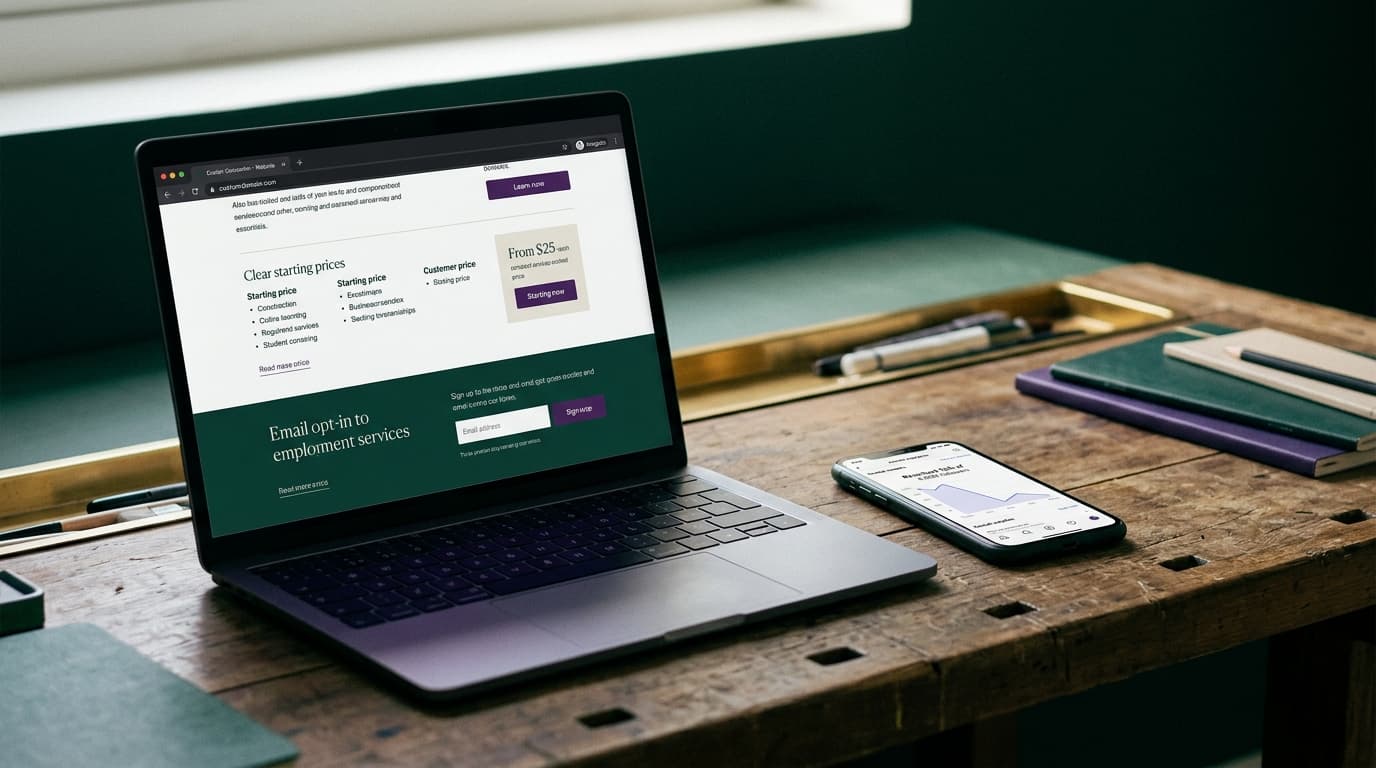
Relying entirely on Instagram or Facebook for your business works remarkably well right up until an algorithm update drops your organic reach into the single digits overnight.
Social platforms are brilliant for top-of-funnel discovery. People scroll past photos of your products or local service, leave a comment, and drop into your direct messages. But relying on social media as your entire digital front door means you are operating on rented land.
Social platforms find customers, but websites convert them
When someone discovers you on social media, they are usually in a passive browsing mood. When someone actively searches Google for your business name or a local service, they have immediate intent to buy or book.
If all you have is a social page, potential customers who do not use that app—or who prefer not to send a direct message just to ask for basic pricing—will simply keep scrolling to a competitor. A simple web page gives search engines a clean landing spot to send high-intent local buyers.
Renting reach puts your distribution at someone else's mercy
On a standard business page, Facebook organic reach typically lands between 1% and 5% of your total followers, while typical Instagram feed posts reach a tiny single-digit percentage of the people who chose to follow you. If you have 5,000 followers, fewer than 250 might actually see your post unless you pay to boost it.
Beyond reach, account lockouts and automated content flags happen without human warning. If an automated system flags your profile or your account gets compromised, your customer contacts and order history locked in DMs vanish instantly. This is why I prioritize owning an email list—it gives you a direct line to customers that no platform policy can revoke.
The honest trade-off: a website is a home, not a megaphone
Here is the truth that web designers rarely admit: launching a website will not magically flood your inbox with leads on day one. A brand-new site has zero built-in audience, while social media platforms offer millions of active users scrolling every minute.
Social channels are far better at fast visual proof and daily engagement. A website does not replace social media; it anchors it. You use social feeds to grab attention and build community, then direct serious inquiries to a page you control.
A minimal website requires far less than you think
You do not need a multi-thousand-dollar site to protect your business. Before deciding how to build, take a practical look at what a basic website costs or how to pick between Wix, WordPress, or custom code.
For most social-first businesses, a clean one-page or three-page site is plenty. You just need clear answers to four basic questions: what you do, who you serve, how much it costs, and how to reach you.
Your minimal owned site checklist
If you currently run 100% of your operation out of DMs, here is the basic setup to launch in a weekend:
- A custom domain name: Secure your brand's
.comaddress so clients can find you directly on search engines. - Core business information: Post your service area, operating hours, and starting prices so serious buyers do not have to guess.
- A direct contact form: Set up a clean contact page that actually converts instead of forcing every inquiry into social DMs.
- An email opt-in form: Collect customer contact info so you can announce sales or news directly without paying for boosted posts.
Once those four pieces are live, keep using social media for what it does best—getting noticed—while knowing your core business stays safe on your own domain.
Keep reading
All posts
What Website Maintenance Actually Requires (and When to Pay for It)
You do not need a expensive monthly retainer to keep a small business site safe and fast. Here is what actually requires attention, what you can skip, and when outsourcing makes sense.
August 12, 2026 · 4 min read