
Paper Trading Options: What It Teaches You and Where It Lies
Part of Options Trading, From the Beginning and Making Money From a Small Site
By Paul Peery · August 9, 2026 · 3 min readUpdated August 13, 2026
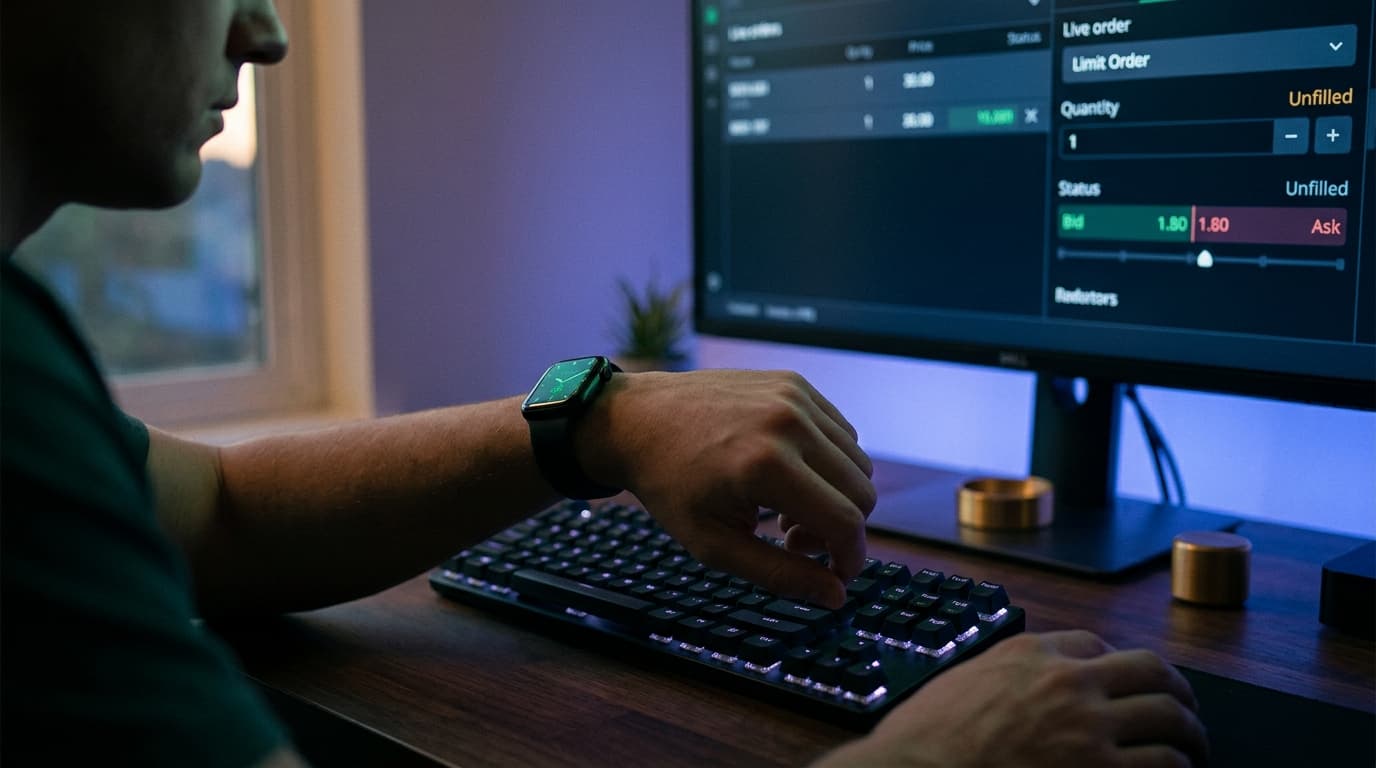
Paper trading will trick you into thinking you are a market wizard within three weeks, right up until you put real cash on the line and your heart rate hits 110 BPM. Practice accounts give you a safe place to make silly mechanical errors for free, but they also build a false sense of security that live markets quickly destroy.
(Disclaimer: This article is for general educational purposes only and is not financial or investment advice.)
Simulators build muscle memory for order entry
If you have never placed a multi-leg trade or read an option chain under pressure, real trading is the worst place to start. A paper account on platforms like thinkorswim, Webull, or Interactive Brokers gives you a risk-free playground to learn what buttons actually do.
You learn how to select strike prices, pick expiration dates, and differentiate between limit orders and market orders. It is where you discover what happens when an option goes in-the-money or expires worthless without paying a $500 tuition fee for a misclicked button. If you are still wrapping your head around the terminology, starting with Options Explained for Complete Beginners: Calls, Puts, and Terms gives you the theoretical foundation before you open the software.
Simulated fills give you unrealistic prices and zero slippage
The biggest flaw in paper trading is execution speed. In a simulated environment, when you put in a limit order at the mid-price between the bid and ask, the simulator almost always fills it instantly.
In the real world, market makers exist to capture the spread. If an option bid is $1.00 and the ask is $1.20, a paper account might fill your buy order at $1.10 every single time. A live order might sit unfilled until you adjust your price up to $1.15. That $0.05 difference sounds small, but on a multi-contract spread or short-term trade, execution slippage wipes out the small edge you thought you had on paper.
Virtual cash hides the visceral gut punch of a losing trade
Paper trading cannot simulate fear or greed. Holding a virtual position down $800 feels like losing points in a video game because your bank balance stays untouched.
When real money is on the line, a sudden 20% drawdown triggers panic. You start watching the chart every 30 seconds, second-guessing your analysis, and closing positions early at the worst possible price. On paper, you might comfortably hold a losing trade through temporary volatility because there is zero risk. Live, that same trade leads to panic-rolling or accepting bad assignment terms. When trades move against you with real capital, having a disciplined process for Rolling vs. Closing: How I Handle Options Trades That Go Wrong matters far more than anything paper trading taught you.
Practice for four weeks, then transition to micro position sizes
Staying in a paper account for six months is a trap that reinforces bad habits. Treat paper trading like a parking lot in driver's ed: stay long enough to learn how to steer and brake, then get onto the road.
A solid target is four weeks or 20 to 30 completed practice trades. Once you can reliably enter orders, edit limits, and track options through expiration without mechanical mistakes, paper trading has served its purpose.
Transitioning to live trading should not mean jumping straight to full capital. Move to real money by trading single contracts or micro position sizes where your total risk per trade is extremely small. That transition is where you learn how your stomach reacts to real gains and losses while keeping your capital safe. Keeping risk manageable comes down to the math behind How I Size Options Trades So One Loss Can't Blow Up the Account.
The paper-to-live checklist
Before you place your first live options trade, check off these four mechanical milestones in your practice account:
- Place at least 5 limit orders and practice editing or canceling them while active.
- Hold a paper position through an entire expiration cycle to see how settlement works in your platform.
- Intentionally log one losing paper trade and document why it failed without resetting your practice balance.
- Fund your live account with only enough capital for single-contract trades, keeping your real risk tiny on day one.
Keep reading
All posts
5 Beginner Options Mistakes That Wreck Accounts (and Rules to Stop Them)
Most beginner options losses don't come from bad market analysis. They come from five preventable position management mistakes—here are the simple rules that stop them.
August 9, 2026 · 4 min read