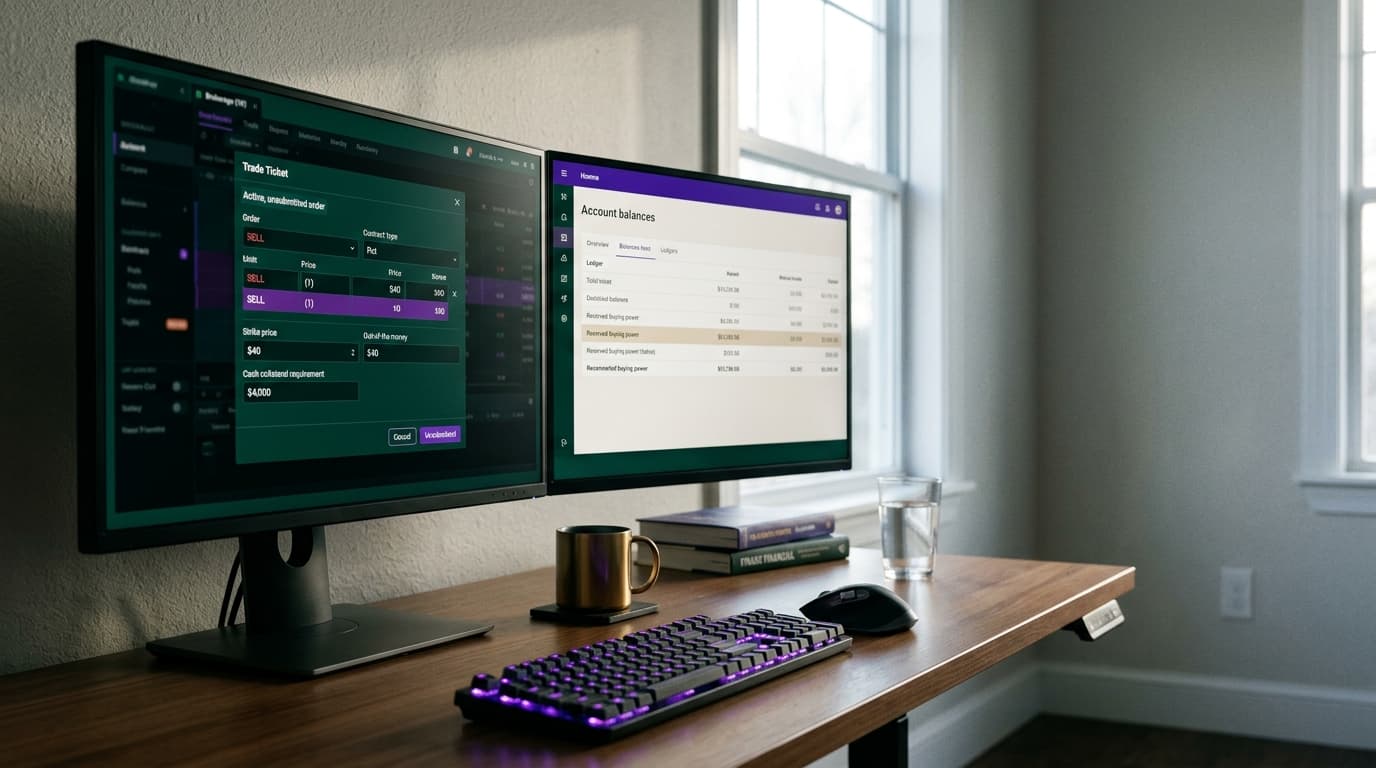
Selling a cash-secured put is often sold as getting paid to buy stock at a discount. Here is how cash collateral works, what early assignment means, and why the downside is real.
Selling cash-secured puts ties up thousands in cash. Vertical credit spreads let small accounts define risk and trade premium without buying 100 shares.
The Black-Scholes formula powers modern options chains, but real traders run it backwards. Here is what the math does, why it matters, and where its assumptions break.
Chasing the biggest premium on an options chain usually leads to bad fills and forced assignments. Here is how to use delta and probability of profit to pick sensible strikes.
Buying a call right before earnings and losing money on a winning stock move is a brutal lesson in IV crush. Here is how binary event risk works and how to manage it.
Most options accounts blow up from sizing mistakes, not bad charts. Here is how to allocate portfolio capital, manage cash-secured puts, and keep dry powder ready.
A plain-language primer on binary event contracts: how prices reflect crowd probabilities, how they differ from options and sportsbooks, and where the risks sit.
Selling covered calls lets you collect cash on shares you already own, but it caps your upside and leaves downside open. Here is how the mechanics, delta targets, and trade-offs actually work.
Buying stocks while carrying a 22% credit card balance isn't investing—it's burning cash. Here is the exact order of operations for your next spare $1,000.
Selling cash-secured puts lets you collect income while waiting to buy shares at a lower price, but it comes with full downside risk. Here is how the mechanics, collateral, and assignments work.
Making money in the market is only half the trade—how you trade decides what you owe the IRS. Here is how capital gains, option premiums, and wash sales actually work.